「古蹟」日本金閣寺
1990 年英國作家 Douglas Adams 和動物學家 Mark Carwardine 到世界各處看瀕臨絕種動物的現況, 後來出書《Last Chance to See》, 不知何故在書裡提到參觀日本京都的金閣寺. 下面是他和導遊的一段對話, 重點是導遊說金閣寺被完全燒毀重建兩次, 但是眼前所見的金閣寺 ( 1955年重建) 是 1397 年的原建築.
I remembered once, in Japan, having been to see the Gold Pavilion Temple in Kyoto and being mildly surprised at quite how well it had weathered the passage of time since it was first built in the fourteenth century. I was told it hadn’t weathered well at all, and had in fact been burnt to the ground twice in this century. “So it isn’t the original building?” I had asked my Japanese guide.
“But yes, of course it is,” he insisted, rather surprised at my question.
“But it’s burnt down?”
“Yes.”
“Twice.”
“Many times.”
“And rebuilt.”
“Of course. It is an important and historic building.”
“With completely new materials.”
“But of course. It was burnt down.”
“So how can it be the same building?”
“It is always the same building.”
Adams 本來感覺 「It is always the same building」這句話很奇怪, 細想卻覺得也有道理, 金閣寺的本質是建築理念, 意圖和設計, 日久建築材料也會逐漸腐壞必須替換, 只要本質得以完整保留原處重建的金閣寺就是原來的金閣寺.
Adams 的思考並非首創, 西方哲學有個源自希臘神話的 Theseuss Paradox, 一艘船因日久木材逐漸腐壞而不斷替補, 最後全無原始材料但是仍視為同一艘船, 17世紀英國哲學家 John Locke 因此問「If I keep patching holes in my sock until none of the original material remains, is it the same sock?」既稱 paradox 就是沒有定論的意思. 即使把金閣寺的重建 (不談其他重建) 視同 Theseuss 式的修補, 我對 Adams 的解說也是存疑, 不過覺得這個話題頗有趣.
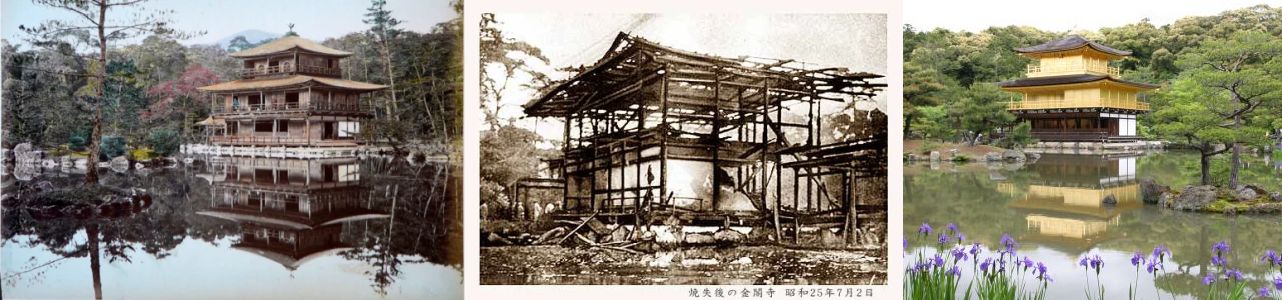
下面左圖是 1885年金閣寺 (可能是修飾過的老相片), 中圖是 1950年燒毀時的樣子, 右圖是 1955年重建的金閣寺.
由 吳怡仁 發佈 @ 4月 17, 2026
0 則留言


0 則留言:
發佈留言
訂閱 發佈留言 [Atom]
<< 首頁